




































New Update Live
Construction Simulator

Game Information

GET TO WORK.

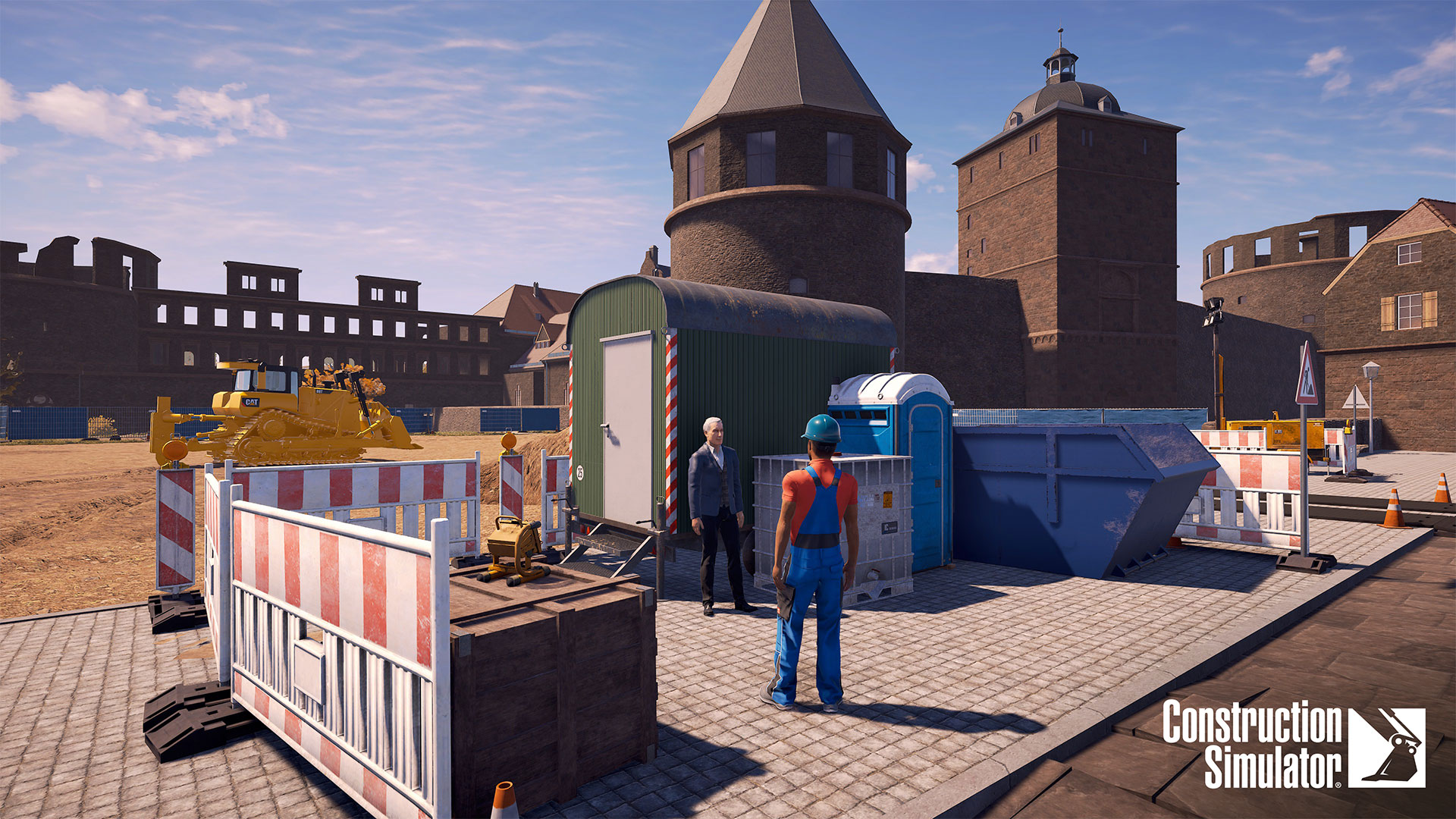
Construction Simulator is back – Bigger and better than ever! Get back to work with a vehicle fleet whose size will knock your socks off. Beyond brands like Caterpillar, CASE and BELL that are already familiar in the Construction Simulator series, you can get behind the wheel of new licensed machines from partners like DAF and Doosan – over 70 in total.

Build to your heart’s content on two maps, inspired by landscapes in the USA and Germany. Experience campaigns unique to the individual settings, featuring special challenges that you need to overcome with your growing construction company. Build it from the ground up with your mentor Hape and expand your fleet to take on more challenging contracts.

Of course, players can look forward to familiar brands and machines from previous installments of the franchise. All these officially licensed partners come with familiar machines and new ones – sporting improved looks: Atlas, BELL, Bobcat, Bomag, CASE, Caterpillar©, Kenworth, Liebherr, MAN, Mack Trucks, Meiller-Kipper, Palfinger, Still, and the Wirtgen Group.

Not only can players enjoy known license partners, but new ones that we’re proud to present. Nine new brands introduce lots of machines and vehicles and even include officially licensed personal protection equipment for your character!

Look forward to over 80 machines from these license partners, all highly detailed to faithfully recreate their real-life counterparts. Not only can you grow your own construction empire, you can also invite your friends to join you. Coordinate and build together to finish contracts even more efficiently!

Features

  • 80+ machines, vehicles and attachments
  • One map inspired by the USA called Sunny Haven
  • Another map inspired by Germany named Friedenberg
  • Each of the two maps comes with its own campaign
  • Challenge yourself with over 90 contracts including road and bridge construction
  • 9 new license partner such as Doosan, DAF und Cifa
  • 25 world-famous brands in total
  • Licensed workwear from Strauss for the first time in the series
  • Dynamic day and night cycle
  • Improved vehicle and earthmoving system
  • Cooperative multiplayer for up to 4 players
  • Cross-Gen multiplayer on consoles
  • Smart Delivery on Xbox consoles and Free Upgrade from PS4 to PS5
  • Supports DualSense features on PlayStation®5
Screenshot Screenshot Screenshot Screenshot Screenshot Screenshot Screenshot Screenshot

Trailer

Atlas Bell Bobcat Bomag Cifa Case Cat DAF Doosan Kenworth Liebherr Mack Man Meiller Nooteboom Palfinger Scania Schwing Stetter Still Strauss Wacker Neuson Wirtgen

Newsletter

Subscribe to our newsletter to get the latest news of Construction Simulator right in your inbox. Please note that you have to confirm your subscription before receiving our newsletter.


I want to unsubscribe

Život Je Čudo Ceo Film ✪

The second miracle is love born from the ruins of hatred. When Luka is tasked with guarding Sabaha, a young Bosniak Muslim captive, he is meant to see her as the enemy. Instead, he falls in love with her. Their romance unfolds to the sound of Kusturica’s signature gypsy-punk music, as a goose watches them make love in a haystack. This is not political allegory so much as a primal refusal of ethnic division. Luka and Sabaha speak different languages—she calls him “my Serbian,” he calls her “my Muslim”—yet their bodies and emotions find perfect harmony. Kusturica dares to suggest that love can be more powerful than the nationalist madness that tears families apart. When Sabaha is exchanged for Luka’s son Miloš, who has become a traumatized soldier, the film does not mourn; it celebrates. Love, in Kusturica’s universe, is never lost—it merely changes shape.

Emir Kusturica’s Život je čudo (2004) is not merely a film about the Yugoslav Wars of the 1990s; it is a cinematic carnival where tragedy and farce, realism and surrealism, despair and ecstatic joy coexist. Set against the backdrop of ethnic conflict in Bosnia, the film follows Luka, a Serbian railway engineer, whose quiet life with his wife Jadranka and son Miloš unravels as war erupts. Yet, the film’s title announces its core thesis: even amid ruins, life itself remains a miracle. Kusturica builds this argument not through political analysis, but through a whirlwind of brass bands, runaway donkeys, star-crossed lovers, and the absurd resilience of the human heart. život je čudo ceo film

The first miracle the film presents is that of irrational attachment to place. Luka has moved from Belgrade to a remote Bosnian town to build a tourist railway tunnel, dreaming of bringing progress to a pastoral idyll. When war comes, his dreams collapse, but he refuses to leave. His home becomes a front-line outpost, yet he continues feeding his pet donkey and tending his vegetable garden. Kusturica frames this stubborn domesticity as heroic: in a world gone mad, watering tomatoes is a form of resistance. The tunnel, originally a symbol of progress, becomes a bomb shelter—then a passage for love. The film suggests that survival depends not on grand ideologies, but on small, absurd attachments to life’s ordinary miracles. The second miracle is love born from the ruins of hatred

Finally, the film offers its third miracle: forgiveness as a form of madness. Luka’s wife leaves him for a Hungarian musician. His son loses his mind after killing a comrade. His village is destroyed. Yet when Sabaha returns to him at the end, the two escape on a donkey toward the sea, crossing into a fairytale finale. Critics have called this unrealistic, even irresponsible. But Kusturica is not making a documentary; he is making a folk tale. The final image—the donkey swimming with its two lovers toward a shimmering horizon—is deliberately impossible. It is a miracle. And in the world of Life Is a Miracle , miracles are the only sensible response to horror. Their romance unfolds to the sound of Kusturica’s

In conclusion, Život je čudo refuses to be a tragedy. It acknowledges suffering—the shelling, the rapes, the betrayal—but it insists that life’s meaning lies in its absurd, musical, passionate contradictions. Kusturica’s film is a roar of laughter in a burning house, a dance on a minefield. It tells us that even when history goes mad, a man can still love a woman from the “wrong” side, a donkey can still bray, and a tunnel can still lead not to death, but to the sea. That, Kusturica argues, is the miracle. That is life.

The second miracle is love born from the ruins of hatred. When Luka is tasked with guarding Sabaha, a young Bosniak Muslim captive, he is meant to see her as the enemy. Instead, he falls in love with her. Their romance unfolds to the sound of Kusturica’s signature gypsy-punk music, as a goose watches them make love in a haystack. This is not political allegory so much as a primal refusal of ethnic division. Luka and Sabaha speak different languages—she calls him “my Serbian,” he calls her “my Muslim”—yet their bodies and emotions find perfect harmony. Kusturica dares to suggest that love can be more powerful than the nationalist madness that tears families apart. When Sabaha is exchanged for Luka’s son Miloš, who has become a traumatized soldier, the film does not mourn; it celebrates. Love, in Kusturica’s universe, is never lost—it merely changes shape.

Emir Kusturica’s Život je čudo (2004) is not merely a film about the Yugoslav Wars of the 1990s; it is a cinematic carnival where tragedy and farce, realism and surrealism, despair and ecstatic joy coexist. Set against the backdrop of ethnic conflict in Bosnia, the film follows Luka, a Serbian railway engineer, whose quiet life with his wife Jadranka and son Miloš unravels as war erupts. Yet, the film’s title announces its core thesis: even amid ruins, life itself remains a miracle. Kusturica builds this argument not through political analysis, but through a whirlwind of brass bands, runaway donkeys, star-crossed lovers, and the absurd resilience of the human heart.

The first miracle the film presents is that of irrational attachment to place. Luka has moved from Belgrade to a remote Bosnian town to build a tourist railway tunnel, dreaming of bringing progress to a pastoral idyll. When war comes, his dreams collapse, but he refuses to leave. His home becomes a front-line outpost, yet he continues feeding his pet donkey and tending his vegetable garden. Kusturica frames this stubborn domesticity as heroic: in a world gone mad, watering tomatoes is a form of resistance. The tunnel, originally a symbol of progress, becomes a bomb shelter—then a passage for love. The film suggests that survival depends not on grand ideologies, but on small, absurd attachments to life’s ordinary miracles.

Finally, the film offers its third miracle: forgiveness as a form of madness. Luka’s wife leaves him for a Hungarian musician. His son loses his mind after killing a comrade. His village is destroyed. Yet when Sabaha returns to him at the end, the two escape on a donkey toward the sea, crossing into a fairytale finale. Critics have called this unrealistic, even irresponsible. But Kusturica is not making a documentary; he is making a folk tale. The final image—the donkey swimming with its two lovers toward a shimmering horizon—is deliberately impossible. It is a miracle. And in the world of Life Is a Miracle , miracles are the only sensible response to horror.

In conclusion, Život je čudo refuses to be a tragedy. It acknowledges suffering—the shelling, the rapes, the betrayal—but it insists that life’s meaning lies in its absurd, musical, passionate contradictions. Kusturica’s film is a roar of laughter in a burning house, a dance on a minefield. It tells us that even when history goes mad, a man can still love a woman from the “wrong” side, a donkey can still bray, and a tunnel can still lead not to death, but to the sea. That, Kusturica argues, is the miracle. That is life.