Install Windows From Hard Drive High Quality -
Top DVD burning software
Super-intuitive user interface
BDXL 100GB and M-Disc support
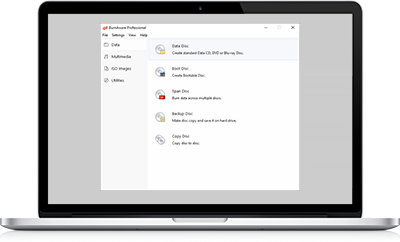
BurnAware is a free CD, DVD, Blu-ray Disc and ISO burning software that allows you to create and burn all disc types, including M-Disc and BDXL (100 GB). Home users can easily create bootable discs, multisession discs, high-quality audio CDs, and video DVDs/BDMVs, as well as create and burn ISO images. Power users will appreciate BurnAware's advanced features, such as audio CD-Text editing, data recovery, disc spanning, and disc copying.
Released January 19, 2026
In an era dominated by USB flash drives and cloud-based recovery tools, the method of installing an operating system directly from a hard drive may seem like a relic of the past. Yet, for many technicians, budget-conscious users, and owners of older hardware, installing Windows from a local hard drive remains a surprisingly practical, fast, and reliable technique. While not the most conventional approach, it offers distinct advantages in specific scenarios, and understanding the process provides valuable insight into how Windows bootloaders and system partitions function.
Despite its utility, the method has notable limitations. The most significant risk is accidentally wiping the very partition containing the installation files during the setup process. Novice users might format the entire drive without realizing they are erasing their source. Furthermore, this technique works best when installing Windows to a different drive than the source partition; attempting to install over the same physical disk requires careful partition management. Modern UEFI systems with Secure Boot can also present obstacles, as they may reject unsigned boot entries. Consequently, this approach is better suited for technicians or advanced hobbyists rather than casual users. install windows from hard drive
Executing the installation requires careful preparation but is far from complex. The core principle is to trick the Windows boot manager into treating the extracted ISO files as a bootable installation environment. First, the user must create a dedicated primary partition on the internal hard drive—typically at least 8 GB for 64-bit versions of Windows 10 or 11. This partition should be formatted as NTFS or FAT32, though FAT32 is required for UEFI systems. Next, the contents of the Windows ISO (either mounted in Windows or extracted using archival software like 7-Zip) are copied directly to that new partition. The final step involves adding this partition to the boot menu, which can be done using a free tool like EasyBCD or manually via the command line with bcdedit . After a reboot, the user selects the new “Windows Setup” entry, and the familiar blue installation screen appears. In an era dominated by USB flash drives
In conclusion, installing Windows from a hard drive is a testament to the flexibility of modern PC architecture. While not the go-to method for most users, it fills a niche that USB drives and DVDs cannot always cover. It empowers users to leverage the hardware they already own, turning a limitation into an advantage. As with any system-level operation, the key to success lies in careful preparation and a clear understanding of disk partitions. When executed correctly, this technique transforms a routine OS installation into a swift, cable-free, and elegantly efficient process—proving that sometimes the most direct path is the one already inside your machine. Despite its utility, the method has notable limitations
Our online user manual provides comprehensive guidance on the disc burning process. Home users can learn basic tasks such as creating and burning ISO images, burning data discs, and making audio and video CDs, DVDs, and Blu-ray discs, as well as copying discs. Advanced users will also find the manual helpful, with instructions on using the command line, burning ISO images with multiple optical drives, and burn files and folders across multiple discs.